
Replacing Old Aluminum Windows in North Texas Brick Homes
Many North Texas homes built in recent decades came with builder-grade aluminum windows set in brick. When they reach the end of their life, the signs are easy to spot: frames that radiate heat in summer and sweat in winter, fogged glass, and sashes that stick or will not stay up. Replacing them in a brick home is routine, but the brick shapes how it is done. In most cases the new window is custom-sized to the existing opening and sealed to the masonry, and a frame-first assessment tells you whether any opening needs more work.
Signs Your Aluminum Windows Are Done
- The frames get hot or cold to the touch. Aluminum conducts heat readily, so the frame passes summer heat into the room and can collect condensation on cold mornings.
- Fog or haze between the panes. The sealed glass unit has failed. Our post on fixing a foggy window covers when the glass alone can be replaced.
- Sashes that stick, drop or will not lock. Worn balances and tracks are common on older builder-grade units.
- Drafts and whistling around the sash. Weatherstripping wears out and is often hard to replace on older aluminum windows.
- Pitted or chalky frames. The finish has broken down and the frame is aging along with it.
How Replacement Windows Go Into a Brick Opening
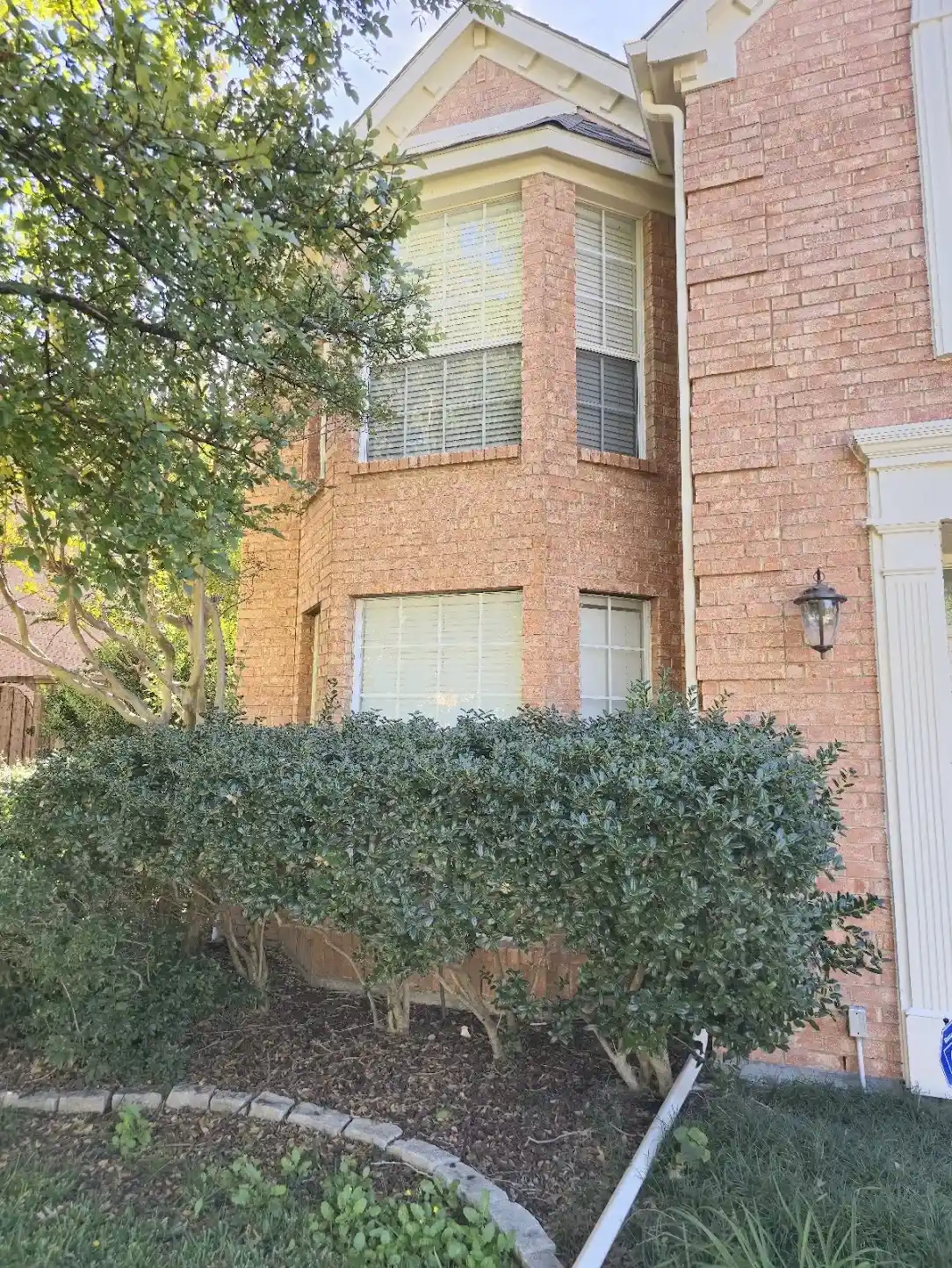
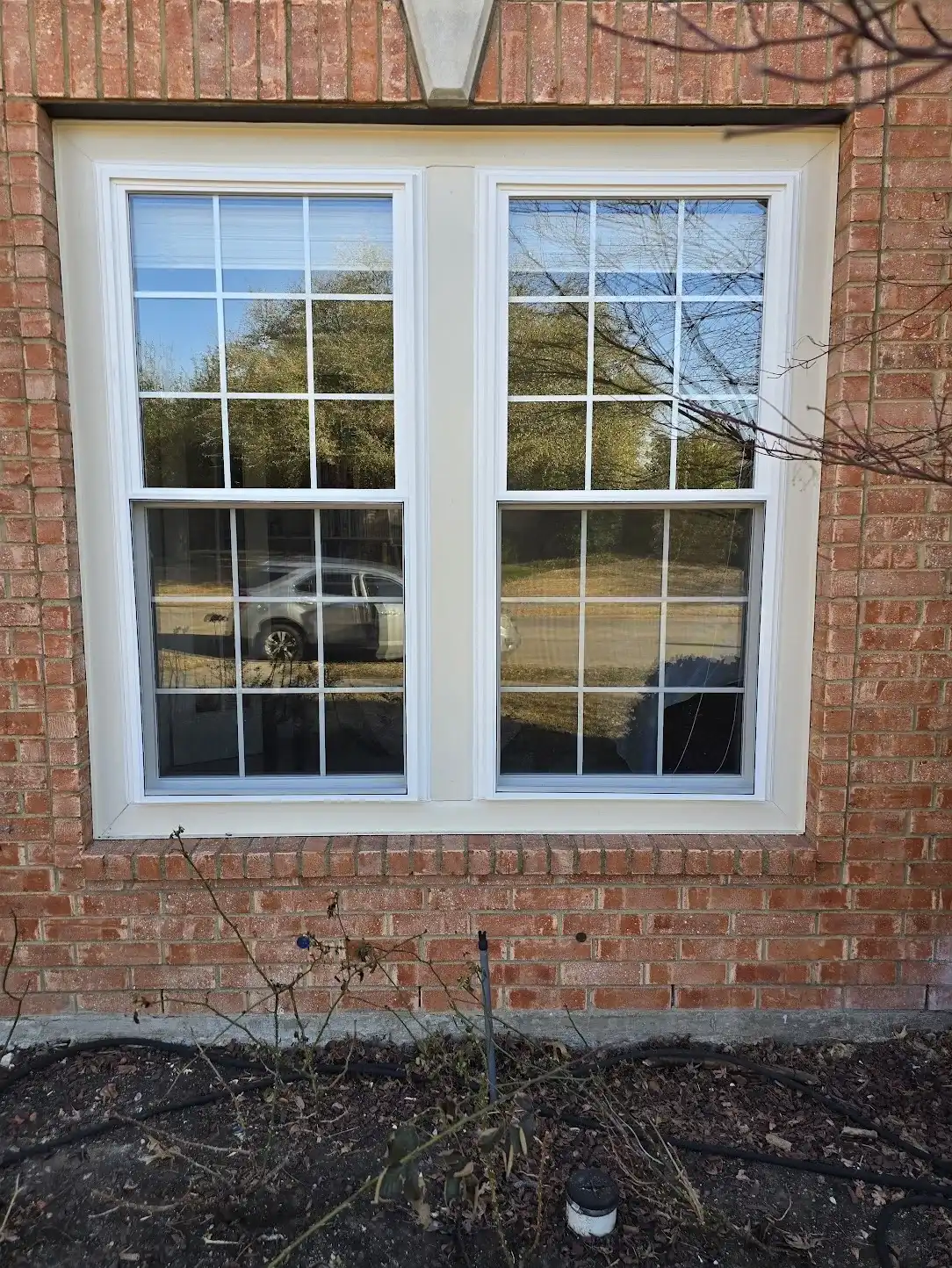
In many North Texas brick homes, the original aluminum window is fastened to the wall framing through a flange that sits behind the brick. Pulling that flange out means disturbing the brick around the opening, so replacement windows are usually built to fit inside the existing opening, set level and square, insulated, and sealed against the masonry. That approach leaves the brick as it is.
Because brick does not flex or trim the way siding does, measurement matters. Each opening is measured at several points, since older openings can be slightly out of square, and the new window is ordered to fit. When an opening shows water damage, soft framing or a frame that has pulled away, it needs more than a standard installation, and the assessment calls that out before anything is ordered. Our guide to full-frame vs. insert replacement explains the two methods.
What to Replace Aluminum Windows With
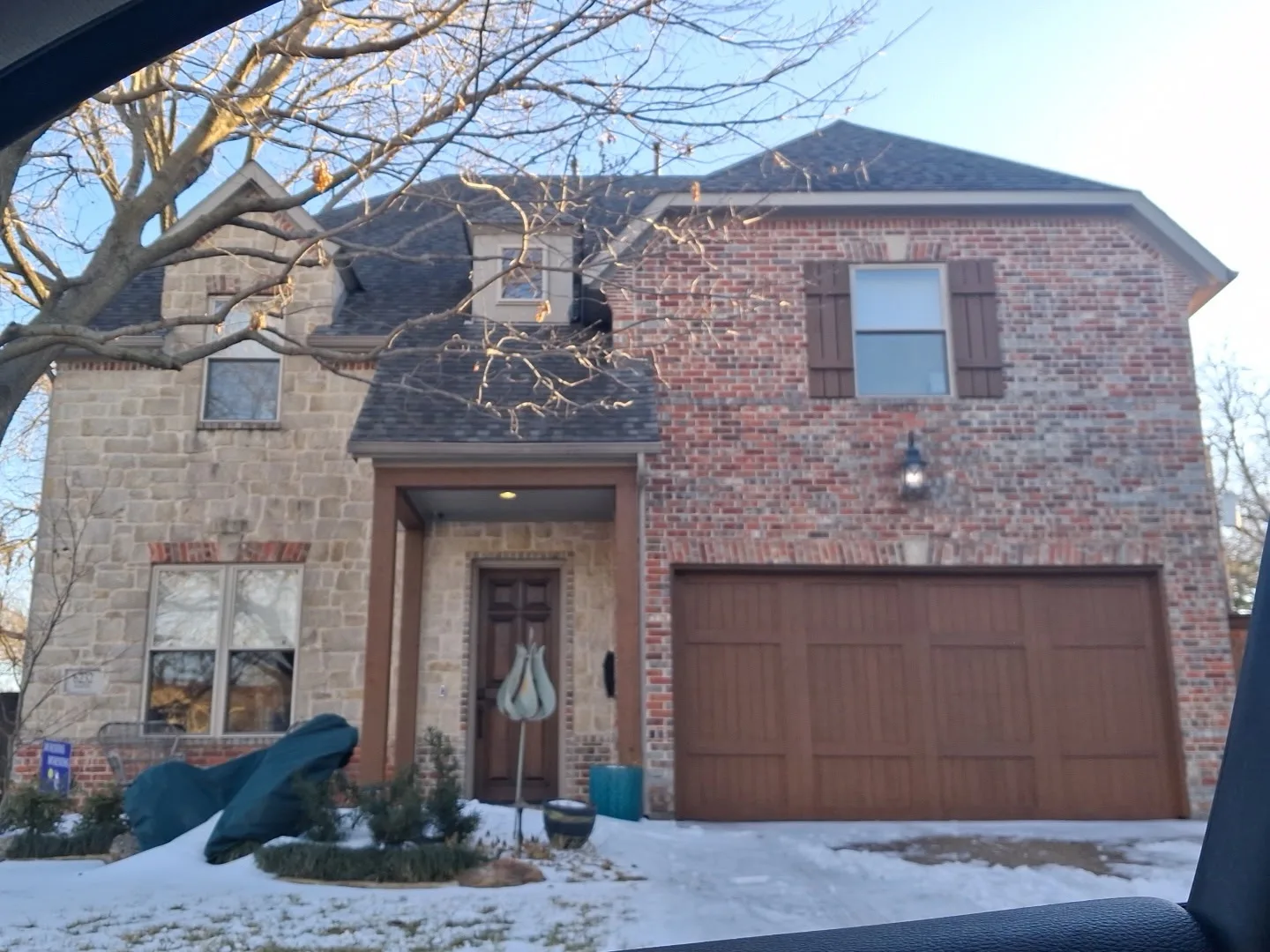
For most homes, the upgrade is a vinyl replacement window with insulated Low-E glass. Vinyl frames insulate far better than aluminum and do not sweat or radiate heat the same way, and a Low-E coating chosen for sun control cuts the summer heat coming through the glass. Our comparison of vinyl and aluminum windows goes deeper on frame materials.
Can I keep my aluminum frames and just replace the glass?
Sometimes. If the frames and sashes are sound and the problem is only fogged glass, replacing the sealed glass unit can be enough. With older builder-grade aluminum, though, the frame itself is often the weak point, which is why the assessment checks the frame before the glass. Here is how we tell the two apart.
The Bottom Line
Builder-grade aluminum windows in brick homes are one of the most common replacements we do across Rockwall, Heath, McKinney, Allen, Plano, Richardson, Wylie, Sachse, Murphy and Rowlett. The brick stays as it is, and each new window is sized to its opening. New window and door installations are backed by our Lifetime Leak-Free Guarantee and a written lifetime limited warranty, with scope and warranty terms confirmed in writing before work begins. Before you collect quotes, read how to choose a window replacement company, see our window replacement service, or book an assessment.
Not Sure Which Path Fits Your Home?
We'll assess the glass, frames, sashes, hardware, drainage, and surrounding structure before recommending glass-only or full-window work.
See If My Frames Can Stay